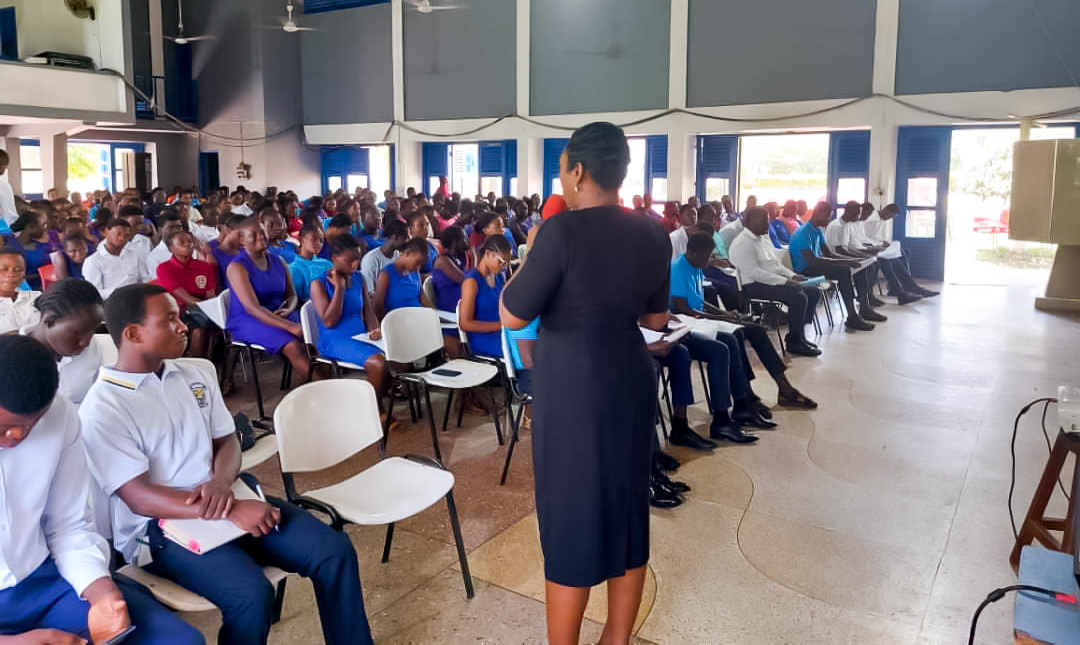
In an effort to promote responsible financial habits among young people, representatives from the Bank of Ghana recently visited our school to deliver an insightful session on financial management literacy. The engagement was both informative and practical, equipping students with essential knowledge to make sound financial decisions.
One of the key areas discussed was the role of the Bank of Ghana in the country’s financial system. Students learned that the central bank is responsible for regulating financial institutions, maintaining monetary stability, issuing currency, and ensuring a safe and secure banking environment. This helped us appreciate the importance of a strong financial authority in national development.
Another important topic covered was how to identify certified or registered financial institutions. The facilitators emphasized the need to verify whether a financial institution is licensed before engaging in any transactions. This knowledge is particularly important in protecting individuals from fraud and unregulated schemes that can lead to financial loss.
The session also touched on investments, where students were introduced to the concept of growing wealth over time. We were encouraged to develop a habit of saving and to explore legitimate investment opportunities carefully, always considering the risks involved.
In addition, the team highlighted the importance of safeguarding personal banking details. Students were advised never to share sensitive information such as PINs, passwords, or account numbers with anyone. This serves as a crucial step in preventing unauthorized access and financial theft.
Loans and borrowing were also discussed in detail. The facilitators explained how loans work, including interest rates and repayment obligations. Students were encouraged to borrow responsibly and only when necessary, ensuring they have a clear plan for repayment to avoid falling into debt.
Finally, the session addressed how to identify genuine and counterfeit currency. Practical tips were shared on recognizing security features embedded in currency notes, helping students to distinguish between real and fake money in everyday transactions.
Overall, the visit by the Bank of Ghana was an enlightening experience. It provided students with valuable financial knowledge that will guide them in making informed decisions, both now and in the future. Such initiatives play a vital role in building financially responsible individuals and a stronger economy.
We are equally grateful for the generous donation of Ten Thousand Ghana Cedis (₵10,000.00) made to the college. This kind gesture is deeply appreciated and will be directed towards initiatives that promote student development and welfare.
Management commends your team for their professionalism and commitment and looks forward to continued collaboration in similar programmes.
Empowering Students Through Financial Literacy Education
 On 0 Comments